

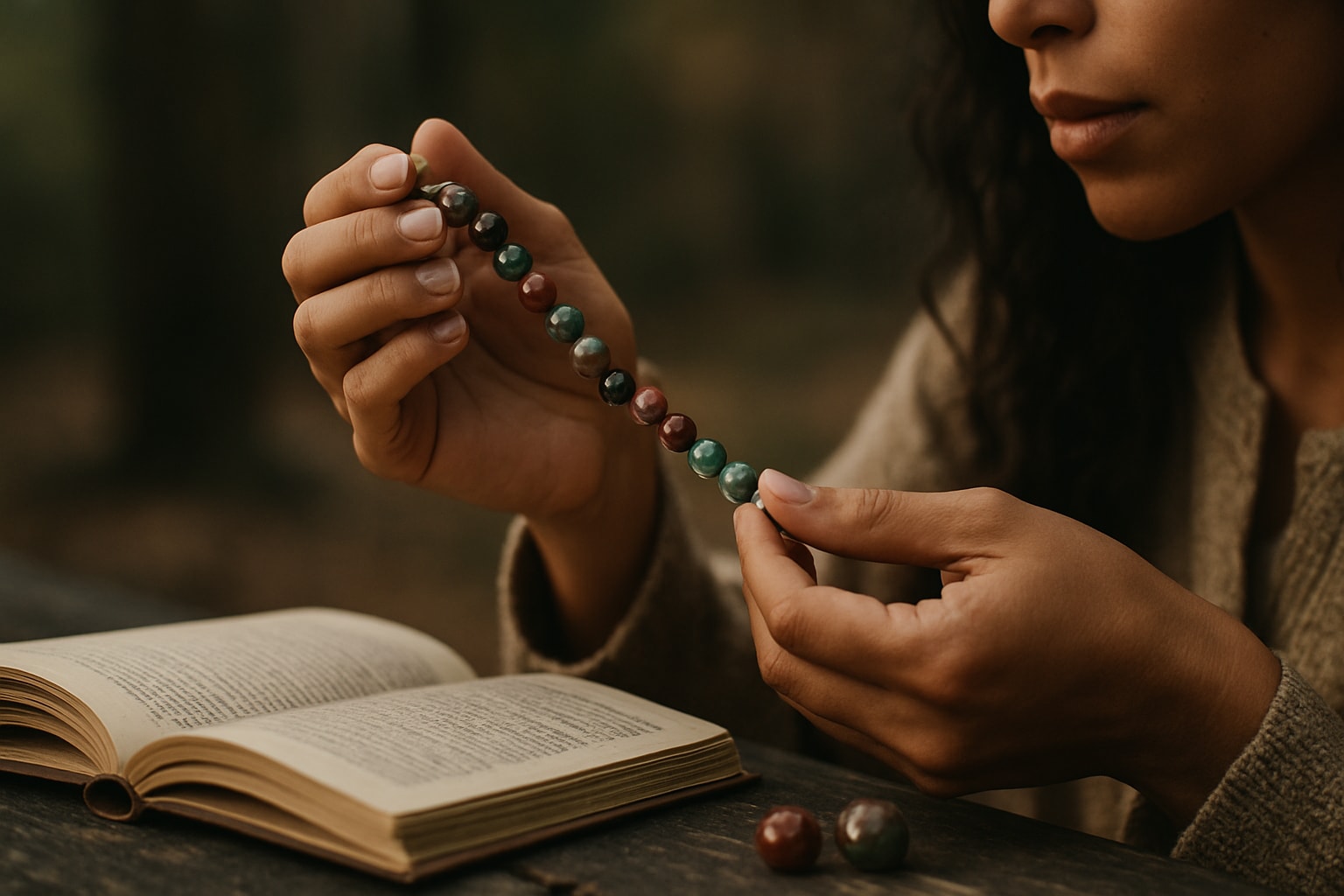
In recent years, gemstone beads have become an indispensable part of the jewelry and lifestyle world. More and more people are discovering the beauty and unique appeal of these special beads.
Whether you design jewelry, collect, or are simply looking for something special, understanding gemstone beads is essential. This guide gives you a complete overview of everything you need to know in 2026.
We'll discuss the different types of gemstone beads, their quality characteristics, creative uses, trends, care, and sustainability. Get inspired by examples and discover the benefits of gemstone beads for your projects. Read on and immerse yourself in this fascinating world.
What Are Gemstone Beads?
Gemstone beads have a fascinating history dating back thousands of years. They're not only beloved as decorative items but also carry deep cultural and personal meanings. In this section, you'll discover everything about the origins, materials, properties, pricing, and identification of genuine gemstone beads. This way, you'll know what to look for as a buyer, maker, or collector.
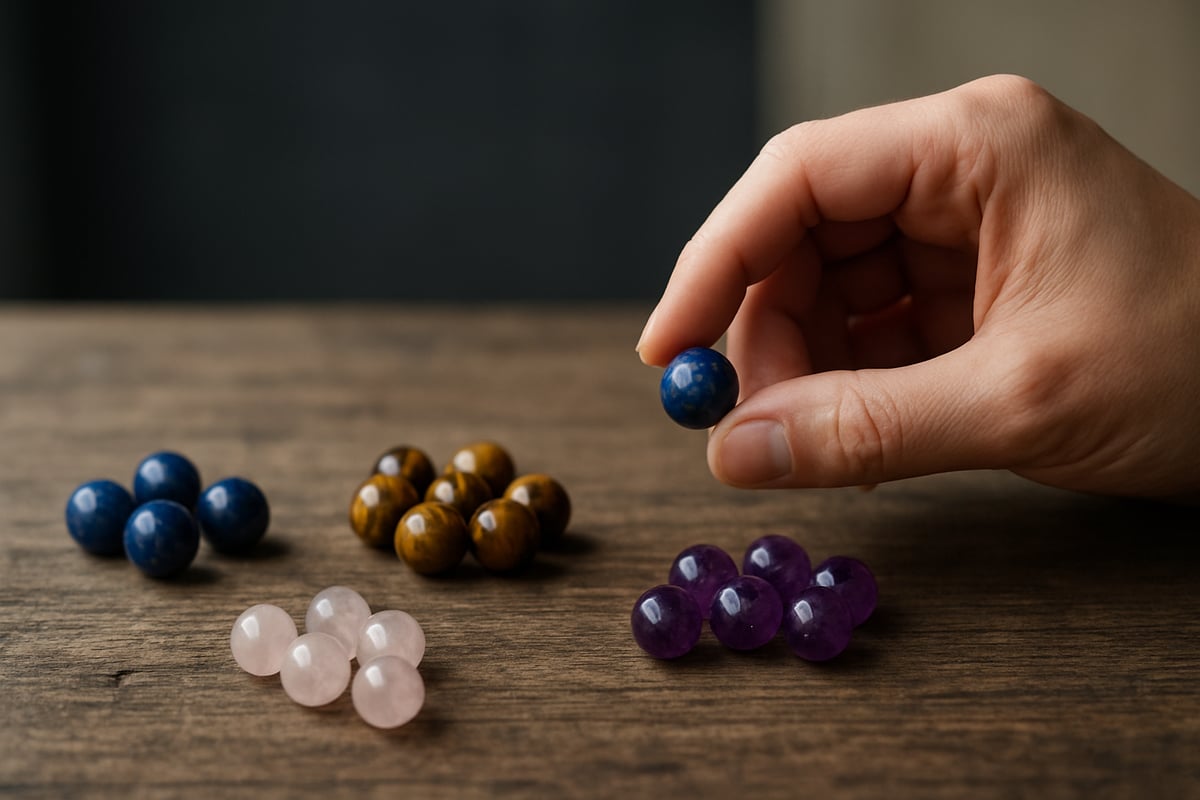
Origin and history of gemstone beads
The history of gemstone beads dates back to ancient Egypt, Mesopotamia, and China. Thousands of years ago, people used these beads not only for adornment but also as symbols of power, status, and protection. Archaeological studies show that gemstone beads are among the oldest forms of jewelry in the world.
In many cultures, certain gemstones were seen as bearers of good fortune, health, or spiritual power. For example, in Egypt, Lapis Lazuli was associated with the divine, and Chinese emperors wore jade beads as a symbol of immortality. Over the centuries, these beads have spread worldwide, and people still value them today for their beauty and meaning.
Materials and types of gemstones
Gemstone beads are available in a wide variety of materials. A distinction is made between natural, synthetic, and treated gemstones. Natural gemstone beads are extracted directly from nature, while synthetic varieties are created in laboratories. Treated gemstones are often colored or heated to enhance their appearance.
Popular stone types include lapis lazuli, tiger's eye, onyx, agate, jasper, and amethyst. The choice of a particular type often depends on regional preferences and traditions. If you'd like to learn more about the different types of natural stone bracelets and their unique uses, you'll find a comprehensive overview here.
Features of gemstone beads
The value and appearance of gemstone beads are determined by several characteristics. A stone's hardness, measured on the Mohs scale, indicates its scratch resistance. Color, transparency, and texture are also important factors. Some beads have a deep, intense color, while others are subtle and translucent.
The finish also plays a role. There's a clear difference between matte and polished gemstone beads. Matte beads look natural and understated, while polished beads stand out because of their light reflection. These qualities together determine the desired look in jewelry and accessories.
Price determining factors
The price of gemstone beads varies considerably. Rarity, size, cut, origin, and finishing are important factors. Gemstones that are rare or have a unique color are often more expensive. The precision of the cut and the quality of the drill hole also play a role.
Below is an overview in table form:
| Factor | Influence on price |
|---|---|
| Rarity | Rarer stones are more expensive |
| Size | Larger gemstone beads cost more |
| Cutting shape | Special shapes increase the value |
| Origin | Unique sites are in demand |
| Editing | Hand-polished beads are often more expensive |
According to market analyses from 2025, prices range from €0.10 to €10 per bead, depending on the material and finish.
Identifying Real vs. Fake Beads
Distinguishing between real and imitation gemstone beads requires careful attention to detail. Practical tips include using UV light, feeling the weight, and checking the bead's cold feel. Real gemstone beads are often heavier and feel cool, while imitation glass or plastic beads are lighter and warmer.
Beware of common imitations like glass, acrylic, or plastic. Genuine gemstone beads often have small imperfections and a natural sheen. By recognizing these characteristics, you'll avoid disappointment and make a conscious choice for authentic materials.
Applications of Gemstone Beads
Gemstone beads play a versatile role in jewelry, lifestyle, and creative projects in 2026. Their unique colors, textures, and symbolism make them beloved by designers, spiritual practitioners, and interior stylists. In this section, you'll discover how gemstone beads are used, from handmade jewelry to inspiring interior design. Curious about what you can create and experience with these special beads? Read on and be inspired by the creative possibilities.

Jewelry making: bracelets, necklaces, earrings
Designing jewelry with gemstone beads is more popular than ever. In 2026, we'll see a rise in minimalist bracelets with a single accent bead, as well as lavish necklaces that combine different stone types. The diversity of shapes and colors creates unique, personalized jewelry.
Common techniques include elastic stringing, working with steel wire, or knotting beads. Makers often choose a mix of matte and shiny gemstone beads to create a playful effect. Examples of popular designs include:
- Bracelets with one striking gemstone among neutral beads
- Necklaces with varying colors and sizes
- Earrings with hanging beads in harmonious shades
Need inspiration for your next project? Browse our natural stone jewelry inspiration for examples and creative ideas.
Spiritual and energetic use
Gemstone beads are used worldwide for their supposed energetic and healing properties. During meditation and yoga sessions, people wear bracelets or malas with specific stones, such as amethyst for tranquility or rose quartz for love.
Spiritual practitioners believe that certain gemstone beads attract energy or release blockages. Consumer research shows that 45% of users are convinced of the healing power of gemstones. Commonly used stones for spiritual purposes include:
- Rose quartz: promotes love and harmony
- Tiger's Eye: gives protection and self-confidence
- Aventurine: stimulates happiness and growth
These applications make gemstone beads popular in alternative therapies and mindfulness practices.
Decoration and interior
Gemstone beads are a striking trend not only in jewelry but also in interior design. They're incorporated into home accessories like curtains, lamps, and table decorations. Their natural look and rich colors add a touch of luxury to any space.
Examples of creative applications include:
- Handmade lamps with hanging gemstone beads
- Curtains with subtly incorporated beads
- Table decorations with loose gemstone beads in glass bowls
These decorative elements create a unique atmosphere and bring the power of natural stone into your home.
Fashion and lifestyle
In the fashion world, gemstone beads make a statement. They're worn by celebrities and influencers who accessorize their outfits with striking bracelets or necklaces. On social media, we're increasingly seeing gemstone beads complete a look.
The influence of this trend is visible in accessories like bag charms and hair clips. The versatility of gemstone beads allows everyone to add a personal touch to their style. Influencers often choose combinations that emphasize their personality or convey a meaningful message.
These lifestyle applications make gemstone beads popular with a wide audience, from fashionistas to trendsetters.
Educational and creative projects
Gemstone beads are also valuable in education and creative therapy. Children learn fine motor skills and color recognition by stringing beads. Gemstone beads are used in workshops and schools to stimulate creativity.
Some examples of educational applications:
- Making colorful bead necklaces in the classroom
- Creative therapy with gemstone beads for relaxation
- Group projects where cooperation and imagination are central
Due to their natural origin and versatility, gemstone beads are suitable for a variety of creative and educational activities.
Quality and Durability of Gemstone Beads
The quality and durability of gemstone beads determine not only the appearance of jewelry, but also its longevity and ethical value. Whether you're a jewelry maker, collector, or conscious consumer, understanding these factors will help you make better choices. In this section, you'll discover what to consider when selecting, the importance of sustainable sourcing, practical care tips, and the latest trends for 2026.
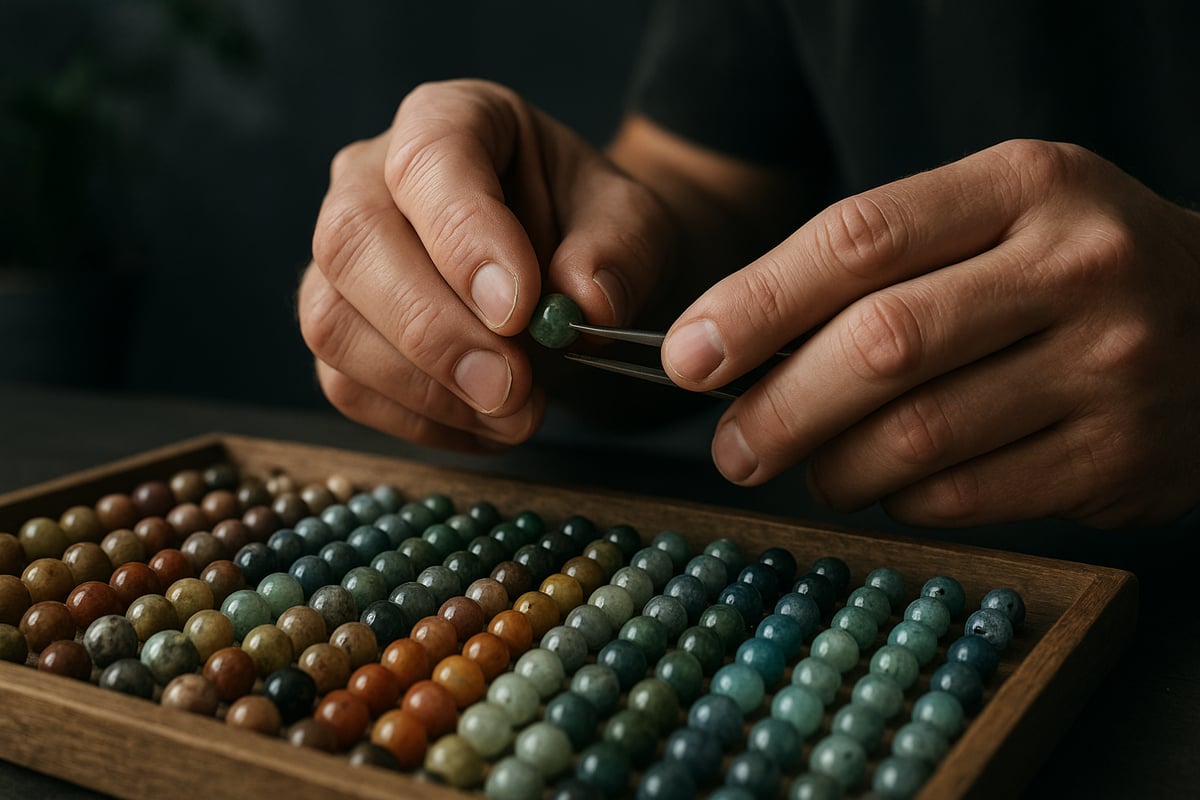
Selection criteria for high-quality gemstone beads
Selecting high-quality gemstone beads begins with assessing their visible and tactile qualities. Consider color, uniformity of size, smoothness of finish, and the precision of drilled holes. A uniform appearance increases value and comfort.
Compare the most important selection criteria in the table below:
| Feature | What to look out for |
|---|---|
| Colour | Depth, evenness, natural tones |
| Uniformity | Equal size and shape, symmetry |
| Finishing | Glossy or matte, no scratches or cracks |
| Holes | Neatly drilled, no sharp edges |
Always consider the origin of gemstone beads and ask for certification from reputable suppliers. Hand-cut beads often display unique details, while machine-cut beads offer a smoother finish. By selecting carefully, you avoid disappointment and invest in jewelry with lasting value.
Sustainability and ethical sourcing
Sustainability is playing an increasingly important role in the choice of gemstone beads. Mining and processing can impact both the environment and local communities. Ethically responsible beads come from mines where fair wages and good working conditions are in place.
The demand for sustainable alternatives is growing rapidly. According to industry associations, demand is expected to increase by 30% by 2025. Fair trade initiatives and transparency in the supply chain make it easier to make responsible choices. Innovations like blockchain technology provide greater insight into the origins of gemstone beads.
If you'd like to learn more about sustainable trends and responsible materials, read the article on sustainable jewelry trends 2025 for current insights and inspiration.
Maintenance and care
Proper care is essential for maintaining the quality of gemstone beads. Clean the beads with a soft cloth and lukewarm water, avoiding harsh cleaning agents. Store jewelry in a cloth bag or storage box to prevent rubbing against each other.
Be aware of the sensitivity of certain stones. Amethyst, for example, can fade with prolonged exposure to sunlight. Some gemstone beads are also less resistant to water or perfume. By handling your jewelry with care, you'll preserve its appearance and prevent damage.
Trends in quality and sustainability for 2026
Looking ahead to 2026, we see a strong rise in technology in gemstone bead production. New methods enable recycled stones to be processed into high-quality beads. Startups are focusing on innovative production processes that consume less energy and water.
Transparency is becoming increasingly important. Certification and blockchain offer insight into the entire supply chain, from mine to store. This way, as a consumer, you know exactly where your gemstone beads come from. These developments make it easier to make conscious choices based on quality, sustainability, and ethical values.
Main Types of Gemstone Beads and Their Meanings
Gemstone beads are loved not only for their beauty but also for their rich history and profound meanings. In this section, you'll discover which types of gemstone beads are most popular, what they represent, and how their symbolism is interpreted in different cultures.
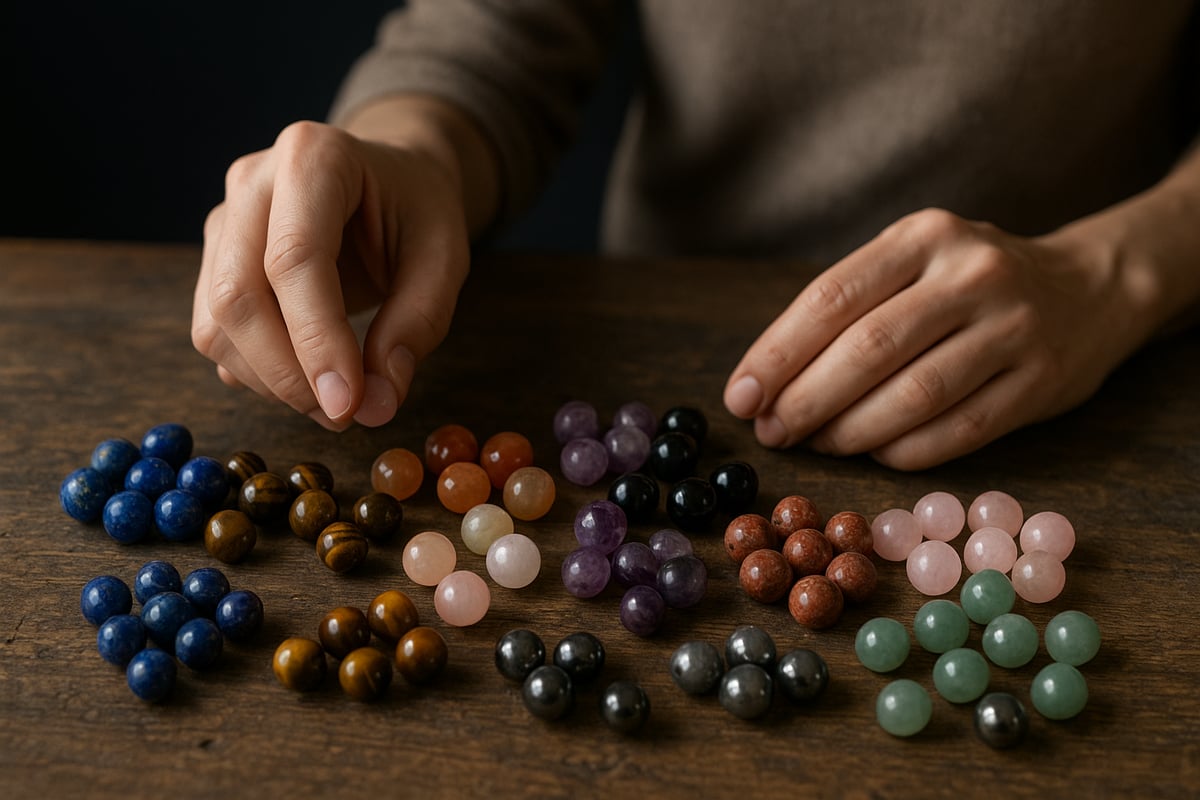
Overview of popular gemstone beads
The most commonly used gemstone beads in jewelry and accessories come from a wide spectrum of colors and textures. Each type of stone has its own unique appearance and properties. Below is an overview of the most popular types:
| Gemstone | Color/Appearance | Properties |
|---|---|---|
| Lapis Lazuli | Intense blue with gold speckles | Opaque, deep color |
| Tiger's Eye | Brown-yellow, satin gloss | Layered, chatoyance effect |
| Agate | Striped, many colors | Semi-transparent, hard |
| Amethyst | Purple, clear to deep | Transparent, crystal structure |
| Onyx | Black, sometimes white striped | Opaque, smooth |
| Jasper | Red, brown, green | Opaque, earthy tones |
| Rose quartz | Light pink, soft | Transparent to opaque |
| Aventurine | Green with sparkle | Fine-grained, sparkling |
| Hematite | Metallic gray, glossy | Heavy, magnetic |
These gemstone beads are sought after worldwide for their versatility and aesthetic value. Lapis Lazuli and Amethyst are particularly popular in luxury jewelry, while Tiger's Eye and Agate are often used in everyday accessories. The choice of a specific type depends on personal taste, desired appearance, and the symbolism associated with the stone.
Symbolism and effects of each gemstone
Each type of gemstone bead is associated with specific properties and symbolism. This makes them especially popular with those who value spirituality or personal growth.
- Lapis Lazuli: Represents wisdom, communication, and inner strength. Often used in meditative jewelry.
- Tiger's Eye: Known as a protective stone and a symbol of self-confidence. Ideal for those who want to guard their boundaries.
- Rose quartz: The stone of love and harmony. Popular in bracelets that express connection.
- Amethyst: Promotes tranquility, balance, and intuition. Often worn during meditation.
- Onyx: Provides strength and perseverance. Suitable for new challenges.
- Agate: Represents stability and protection. A favorite among travelers.
- Jasper: Gives courage and energy, supports with stress.
- Aventurine: Stimulates optimism and creativity.
- Hematite: Has a grounding and protective effect, promotes concentration.
Want to learn more about the deeper effects of gemstone beads and their use in jewelry? Then read the comprehensive overview of gemstone bracelets and their effects . This way, you'll discover which stone best suits your needs and stage of life.
Cultural and historical meanings
The meaning of gemstone beads varies by culture and era. In ancient Egypt, lapis lazuli was considered sacred and used in amulets for protection. Tiger's eye was popular in Roman armies for its supposed protective properties during battle.
In the Middle East, agate was incorporated into talismans and jewelry to ward off evil. In China, jasper symbolizes harmony and is considered a stone of good fortune. Rose quartz was already used in ancient Greece as a gift of love.
These cultural interpretations make gemstone beads extra special. By choosing a specific stone, you're not only wearing a beautiful piece of jewelry, but also a piece of world history and symbolism.
Trends and Innovations in Gemstone Beads 2026
The world of gemstone beads will be more dynamic than ever in 2026. Designers, makers, and collectors are witnessing a wave of new trends, materials, and technologies. Curious about what's happening and what to look out for? Below, you'll discover the key developments shaping gemstone beads in the coming year.
New colours, shapes and finishes
In 2026, gemstone beads will be recognizable by their striking shapes and colors. Irregular beads are gaining popularity, with natural imperfections being valued. Matte finishes and unique cuts, such as raw-cut and faceted beads, are popular with both minimalists and statement-piece enthusiasts.
Color trends are focused on warm earth tones, deep greens, and pastel combinations. Designers are combining different textures for a unique look. According to Bead Trends 2025–2027, combinations of matte and shiny gemstone beads are a lasting trend.
| Trend | Description |
|---|---|
| Irregular | Naturally formed beads |
| Matte finish | Soft, non-glossy surfaces |
| Raw cut | Unpolished, rough look |
| Pastel | Soft color combinations |
Technological developments
Technology is transforming the use of gemstone beads. By 2026, 3D printing will be used to create unique bead shapes that were previously impossible. Laser engraving allows patterns or symbols to be incorporated directly into the beads, taking personalization to a new level.
Artificial intelligence plays a role in design selection and matching gemstone beads based on color, shape, and quality. This accelerates the design process and makes customization more accessible for small workshops and hobbyists.
Sustainability and transparency
Sustainability is central to the production of gemstone beads. More and more suppliers are opting for environmentally friendly methods and transparent supply chains. Blockchain technology is used to trace the origin of each bead, giving consumers assurance about ethical sourcing and processing.
Innovations in recycling are allowing residual pieces from mining and production to be processed into new gemstone beads. Demand for recycled and fair-trade beads is growing, further stimulating the market toward responsible choices.
Influence of fashion and pop culture
Fashion designers and well-known brands are embracing gemstone beads in their collections. Collaborations create striking statement pieces that are visible on the catwalk and on social media. According to Jewelry Trends 2026, 60% of new jewelry lines feature gemstone beads, further increasing their popularity.
Celebrities and influencers are wearing gemstone beads as a fashion statement, fueling demand for exclusive and eye-catching designs. Trends spread quickly thanks to platforms like Instagram and TikTok.
Rise of personalized jewelry
Personalization has become essential for gemstone beads. Online platforms offer customers the opportunity to create their own combinations, from color to meaning. Customers choose the beads that reflect their personal story, style, or intention.
This trend allows for the creation of unique jewelry that is not only aesthetically pleasing but also carries a deeper meaning. Personalized bracelets and necklaces with gemstone beads are therefore the perfect gift in 2026.
Step-by-step plan: Make your own jewelry with gemstone beads
Making your own jewelry with gemstone beads is an inspiring process that combines creativity and craftsmanship. Whether you're a beginner or already experienced, this step-by-step guide will help you get started in a structured and enjoyable way. Follow each step for the best results and discover how to create unique jewelry that reflects your personal style.
Step 1: Inspiration and design choice
Before you start making gemstone beaded jewelry, it's important to gather inspiration and choose a design that suits you. Consider which colors reflect your mood or which gemstones hold special meaning for you. Use mood boards, browse magazines, or get inspired by beaded bracelet trends and tips to discover current styles.
Explore examples of minimalist designs or striking combinations. Ask yourself: do I want a subtle bracelet or a statement necklace? By clarifying your vision beforehand, you'll lay a strong foundation for your creation. Don't forget that gemstone beads come in countless shapes, colors, and sizes, allowing for endless variations.
Step 2: Gather materials and tools
To make jewelry with gemstone beads, you'll need the right materials and tools. First, gather the beads you want to use, paying attention to their quality, color, and size. Also, choose sturdy wire, steel wire, or elastic, depending on the type of jewelry you want to make.
Essential tools include pliers for bending and cutting wire, a beading board for organization, and various clasps and clips. Don't forget to add accessories like spacers or charms for a personal touch. Proper preparation will prevent frustration during the beading process and keep you focused on the creative aspect of gemstone beading.
Step 3: Preparing and sorting beads
Before you start stringing, it's helpful to sort your gemstone beads by color, size, and type. Use a bead board or a compartmented container to keep track. This speeds up the process and prevents errors in the pattern.
Sort by color first, then by size, and finally by shape. This way, you can easily switch between different combinations. Properly preparing your beads ensures a smooth beading process and gives you room to experiment with new patterns and arrangements.
Step 4: Stringing and mounting
Now that you've sorted all the gemstone beads, you can start stringing them. Choose a stringing technique that suits your desired end result, such as elastic thread for bracelets or steel wire for necklaces. Begin stringing the beads according to your design, paying attention to symmetry and balance.
Work slowly and check the pattern regularly. Use spacers or accent beads to add variation. Once you're satisfied, attach the clasp securely. Properly fastened ensures your jewelry is comfortable to wear and lasts a long time.
Step 5: Finishing and checking
After stringing, it's time to neatly finish the jewelry. Hide knots or threads with crimp beads for a professional look. Check that all gemstone beads are securely fastened and the jewelry hangs smoothly.
Test the jewelry for comfort and durability by carefully putting it on and taking it off. Small adjustments can make all the difference in appearance and ease of use. Pay attention to detail for a perfect end result you can be proud of.
Step 6: Care and storage
To keep your gemstone beaded jewelry beautiful, proper care is essential. Clean your jewelry regularly with a soft cloth and avoid contact with water, perfume, or chemicals. Some gemstones are sensitive to sunlight or moisture.
Store your jewelry in a dry, dark place, preferably in a cloth bag or separate box. This will prevent scratches or discoloration. By handling your creations with care, they will remain beautiful and retain their original appearance for years to come.
Avoid common beginner mistakes
Beginning gemstone bead jewelry makers often make the same mistakes. These include stringing too tightly or too loosely, or combining materials that don't complement each other well. They also sometimes choose inferior quality wire, which shortens the lifespan.
Pay close attention to the instructions when choosing wire and clasps. Take the time to check the design before finalizing it. More tips on avoiding mistakes and creating trendy jewelry can be found in beaded bracelet trends and tips .
Inspiring examples of DIY projects
Get inspired by successful DIY projects with gemstone beads. Think bracelets with a combination of matte and shiny beads, or necklaces that combine different gemstones for a playful effect.
Many crafters share their projects online, allowing you to follow step-by-step examples. By learning from others, you'll quickly develop your own style. Experiment and don't be afraid to try new techniques, because with gemstone beads, the possibilities are endless.
Now that you know all about the extraordinary world of gemstone beads—from their history to the latest trends and practical care tips—you might be curious about what's possible with these natural materials. Whether you're looking for a timeless gift, a stylish accessory for everyday wear, or inspiration for your own creations, at Stoney Bracelets you'll find an extensive collection of handmade natural stone bracelets, carefully curated for quality and durability. Want to explore the full range? Then feel free to browse and Shop All Bracelets .
Necklace Bead Guide 2026: Inspiration for Your Unique Jewelry
Tiger's Eye Meaning Guide: Spiritual Power and Effect 2026