

We do not sell jade. That's the honest opening you deserve when you search for "jade bracelet" and land on our page. Jade is a beautiful stone with thousands of years of history, and we understand exactly why you're looking for it. But we only work with stones we can fully guarantee. You can view our complete gemstone collection for what we do have.
What we can offer you: honest information about jade, three alternatives from our range that fulfill the same buying intention, and a comparison so you can decide for yourself.

Jade (jadeite and nephrite) is a mineral that we do not carry in our assortment. The quality differences in jade are significant, the market has many fakes, and we exclusively work with stones that we personally control and guarantee. Our three alternatives for those seeking green, natural, or unique stones are: African turquoise, moonstone, and labradorite.
What jade is and what it costs
Jade is a collective term for two minerals: jadeite and nephrite. Jadeite is rarer and more valuable. Nephrite is tougher and more widely available. Both variants are best known in green but also come in white, lavender, and black. The stone has a Mohs hardness between 6.5 and 7 and has been used for over six thousand years in jewelry and carvings, especially in Chinese, Mayan, and Maori cultures.
The price of jade varies enormously. This is one of the reasons why it is difficult for a gemstone workshop to offer high-quality jade without a significant price risk.
| Quality Level | Price Indication | What you get |
|---|---|---|
| Imperial Jadeite | €500 to thousands | Deep green, semi-transparent, with certificate |
| Commercial grade | €50 to €200 | Often treated, filled, or dyed for better color |
| "Jade" bracelets €5-20 | Fake | Dyed howlite or glass, not real jade |
These price differences are not a sales argument for our stones. It's context you need to make an informed decision, whether you buy from us or elsewhere. More background on jade as a stone can be found in our article on jade jewelry.
Three alternatives from our assortment
The demand behind "jade bracelet" is rarely purely for jade. Most people are looking for something green, something with a soft appeal, or something with status and character. Here are three stones that honestly address each of those intentions.
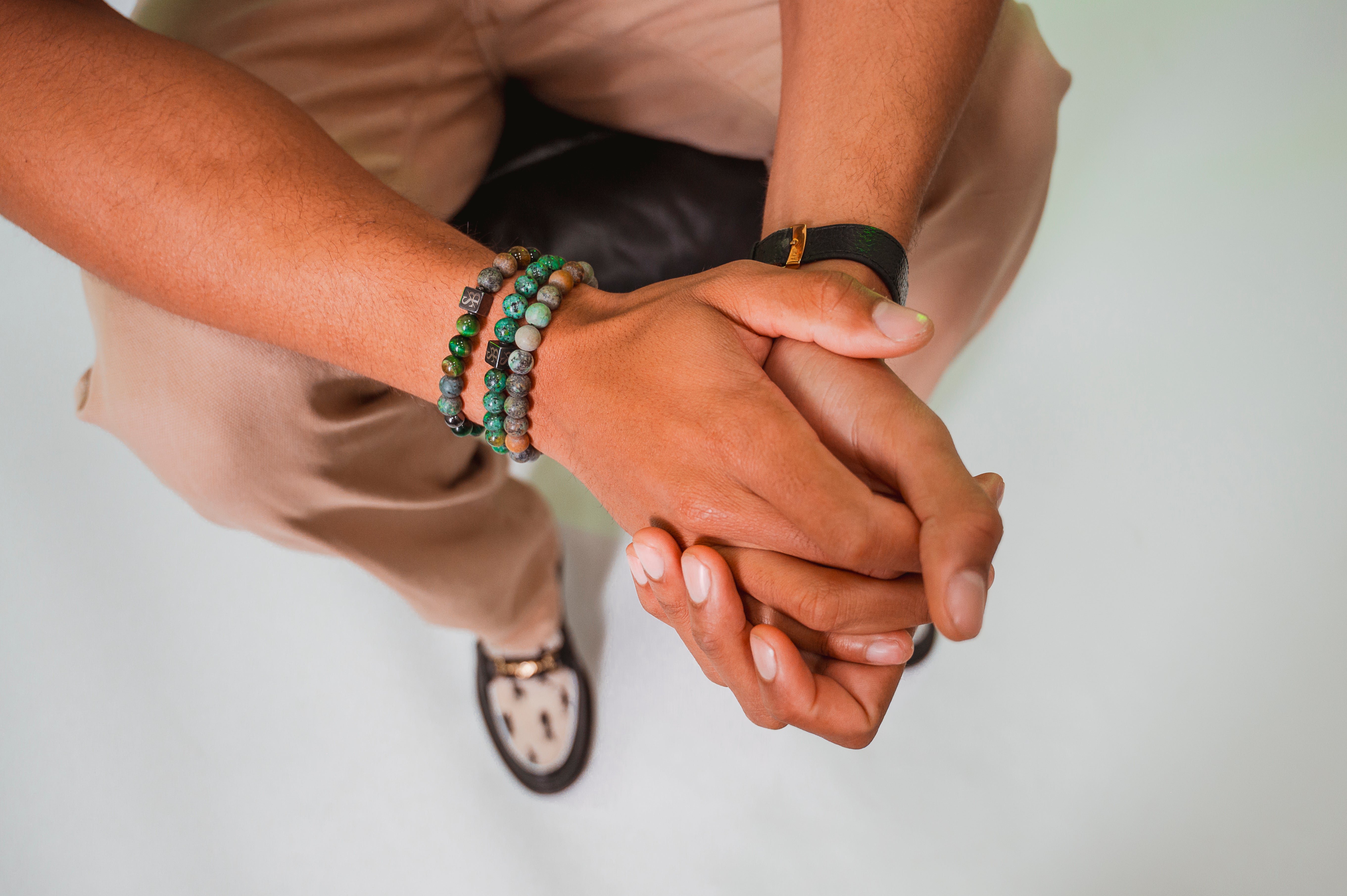
African turquoise is actually a form of jasper. The color is green with brown and cream-colored veining. The color palette overlaps with some jade variants, although the hue is warmer and earthier. Each bead has a different pattern, making the stone visually interesting without being over-the-top.
View African TurquoiseMoonstone has a white-blue milky sheen similar to the cream-white jade variants. The subtle play of light (adularescence) gives the stone an almost ethereal character. For those seeking the calm, natural look of jade but not necessarily needing green.
View MoonstoneJade attracts people because of its uniqueness and story. Labradorite does the same in a different way: depending on the light, flashes of green, blue, and gold appear in the stone. No two beads are identical. It's a stone that people always want to look at more closely.
View Labradorite
Comparison: jade versus our three alternatives
| Property | Jade | Afr. Turquoise | Moonstone | Labradorite |
|---|---|---|---|---|
| Color | Green (light to deep) | Green with brown veining | White-blue with sheen | Gray with color flashes |
| Appearance | Classic, status | Earthy, warm | Elegant, subtle | Mysterious, unique |
| Hardness (Mohs) | 6.5 - 7 | 6.5 - 7 | 6 - 6.5 | 6 - 6.5 |
| Price (bracelet) | €50 - €500+ | From approx. €29.90 | From approx. €29.90 | From approx. €29.90 |
| Available from us | No | Yes, handmade | Yes, handmade | Yes, handmade |
If you still want to buy jade
We're not stopping anyone. If jade is truly what you're looking for, there are a few things to keep in mind:
- Only buy from jewelers who can provide a gemological certificate
- Specifically ask for jadeite or nephrite, and for the treatment grade (A, B, or C-grade)
- A-grade jade is untreated. B-grade is polymer-filled. C-grade is dyed. Only A-grade retains its value
- Test authenticity: jade remains cool to the touch, feels heavy for its size, and has a smooth texture
- Be critical of bracelets under €30 sold as "real jade"
We do not sell jade, and that is a conscious choice. If you're looking for green: African turquoise. If you're looking for the soft elegance of jade: moonstone. If you're looking for the unique character and status: labradorite. All three are handmade in our workshop in Rosmalen, with 100% genuine gemstones. If you still want jade: buy from a jeweler with a certificate and expect a more serious investment.
View our gemstone collection
20,000+ customers, 1,800+ reviews with an average of 4.8 out of 5. Custom handmade in Rosmalen.
View African Turquoise Or view moonstone · labradorite
Lava Stone Properties: Volcanic Rock with Odor Absorption and Maintenance
Silver Bracelets for Women: What We Have and What We Don't