

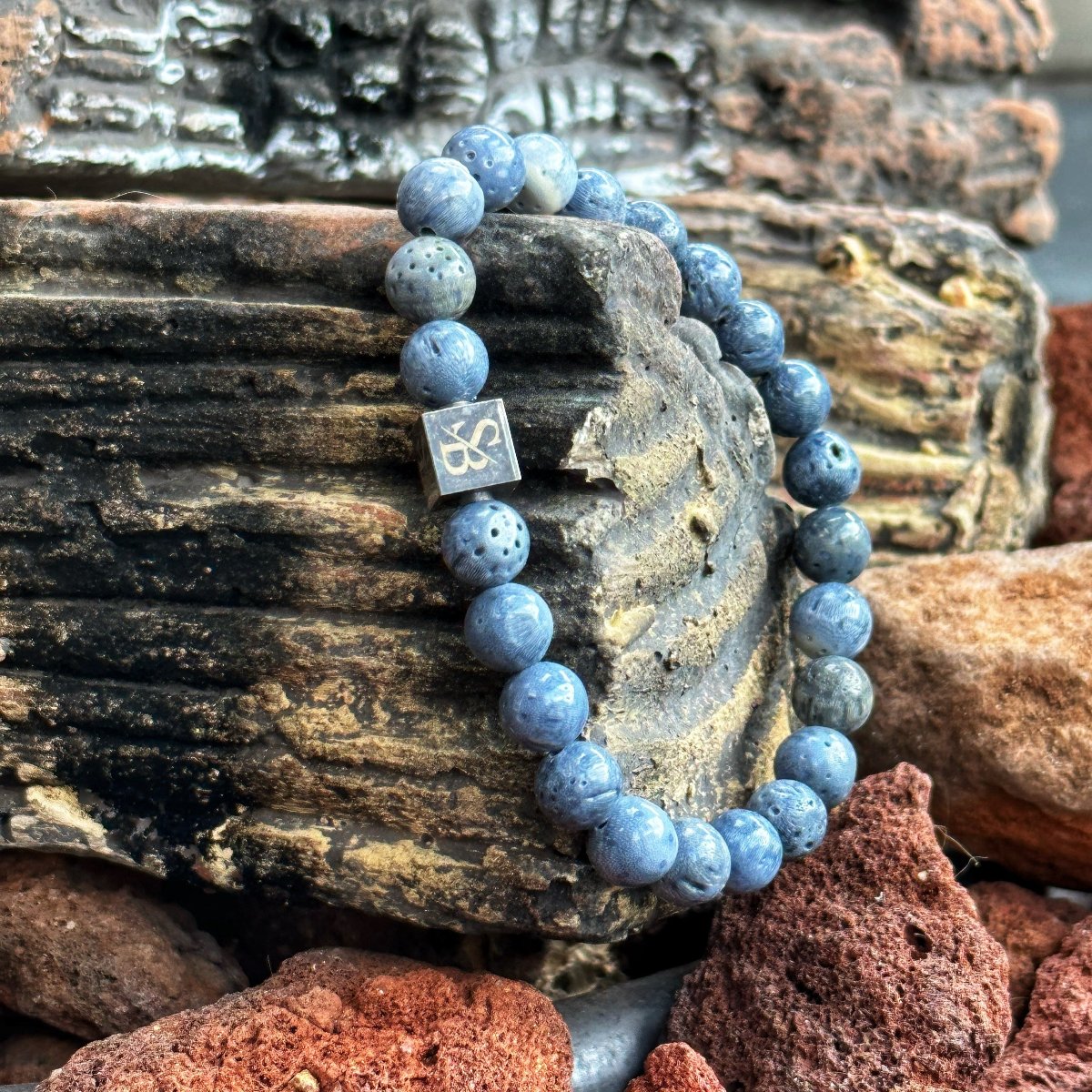
Type "coral bracelet" into a search bar and most people picture red or pink. Our coral is blue. It is a soft, denim-blue bead with a raw, porous surface, and that surprises anyone who was counting on red. Below you'll read what this material is, why it can be blue, how to recognize it and what to do to keep it looking good. The wider range is in our gemstone bracelets.

What coral actually is
Coral is not a rock that grew in the earth. It is the calcium skeleton of a reef coral: an organic material made of calcium carbonate. That explains two things you notice right away. The surface is porous, with tiny holes where life once sat in the skeleton, and a fine, fibrous pattern runs across the bead, a bit like wood. You won't find polished glass like obsidian here.
The blue tone is in the material itself. In our photos it is a muted denim color, sometimes with a lighter or even white bead in between. That comes with natural material: no two beads take on the same shade.
Four things to know before you wear one
How to recognize real coral
Look at the surface, not just the color. Real coral has irregular holes and a fine fibrous pattern that runs differently on every bead. A bead with exactly the same shade everywhere and a smooth, glossy surface points more toward a dyed or cast material.
Also pay attention to temperature and weight. Coral feels cool, warms up slowly and has a dry, slightly rough touch. A plastic bead feels warmer and lighter.

Coral next to other matte stones
Matte, porous or understated stones look alike on paper, but they wear very differently. For more on the finish itself, read matte versus polished obsidian.
| Stone | Look | Character |
|---|---|---|
| Blue coral | Denim blue, matte, small holes and fibrous pattern | Raw and relaxed, soft in color |
| Lava stone | Dark gray to black, rough and porous | Rugged and neutral, no color |
| Matte lapis lazuli | Deep blue, matte, sometimes with light veins | Deeper and more serious than coral |
Wearing it without the color shouting
Blue coral is a calm color. It works as the only accent with a white shirt, a gray sweater or jeans, and it sits well with other shades of blue without clashing. In the photo below you can see how lighter, porous beads behave next to deeper blue beads on a dark, charred piece of wood: the tone stays within the same family and the surface makes the difference.

Want contrast instead? Pick a bold partner. In the next photo, blue coral sits next to a green stone with purple spots: the coral stays the calm base and the other bracelet takes care of the exclamation mark.

With a silver accent
Want coral with something extra? Our Poseidon Silver+ combines blue coral with rhodonite and a silver bead. You'll find it among the bracelets with silver. In the photo the blue of the coral is easy to spot, the pink rhodonite adds warmth and the silver brings a cool shine.

Caring for a soft stone
| What | Do this | Avoid this |
|---|---|---|
| Cleaning | Wipe with a soft, dry cloth | Water, soap and abrasives |
| Perfume and sweat | Take the bracelet off before you put on perfume | Spraying your wrist with the bracelet on |
| Pool and sports | Take it off and store it separately | Chlorine, salt water, heavy work |
| Putting it on | Roll it gently over your hand | Stretching the cord roughly |
We only carry blue coral, in 8mm. No red or pink coral and no 6mm. If you're looking for red, this stone isn't what you have in mind. We'd rather tell you now than after you order.
Choose coral if you want a calm blue bead with a raw, matte surface. Keep its softness and acids in mind, and don't wear it for sports or in the pool.
Blue coral, matte and raw
The bracelet in 8mm, in Small through X-Large. Not sure of your size? Check the size chart first.
View the Coral Stones 20,000+ customers · 1,800+ reviews · 4.8 average
Bracelet Changing Color? These Are the Causes
Sneeuwvlok Obsidiaan Betekenis: Wat Zwart Glas met Witte Vlekken Symboliseert